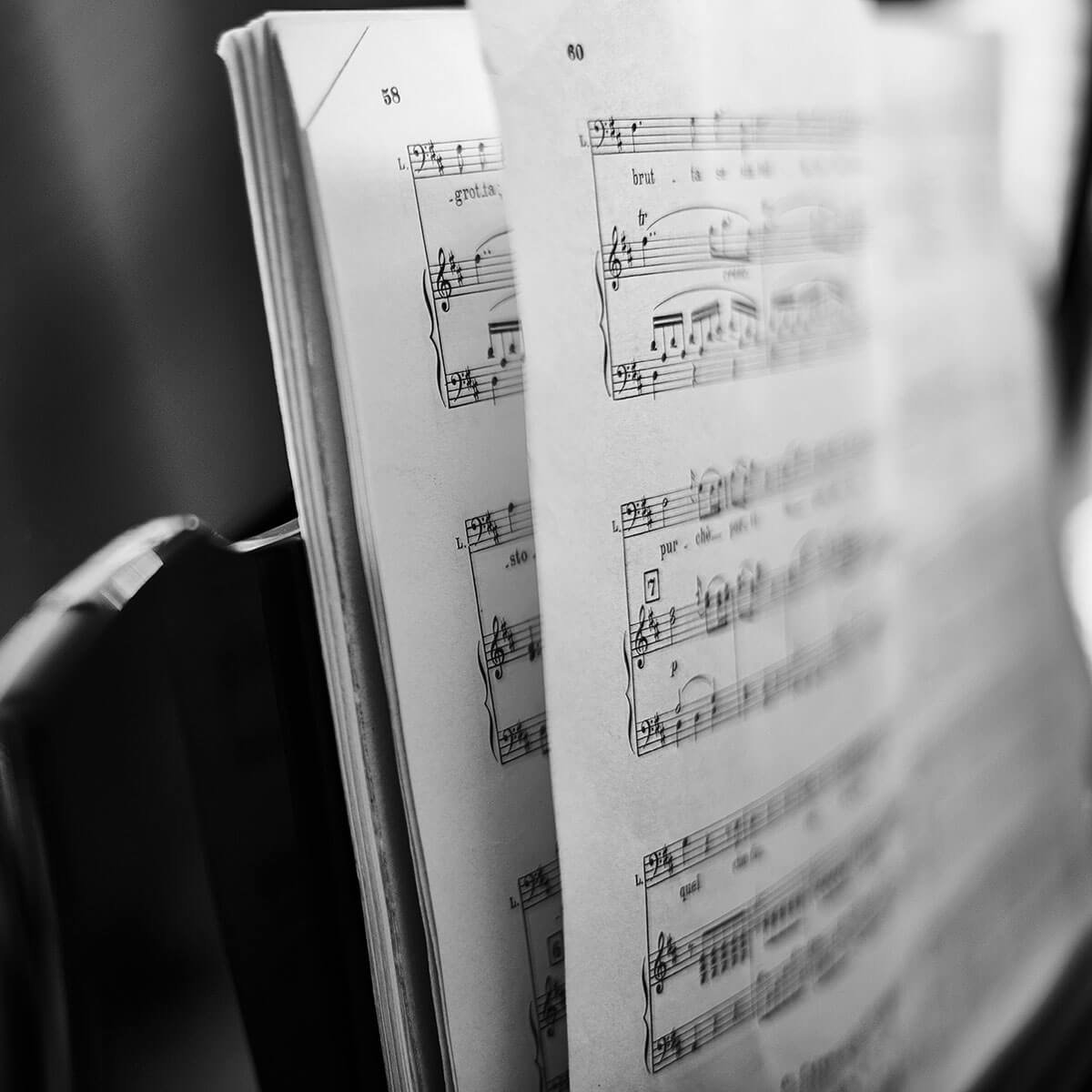
Step into the grandeur of ancient Rome, feel the grit of the desert, and brace yourself for the thunder of chariots. In the realm of Soundtrack, Score & Musical Themes (1959 Film), few productions command the same awe and respect as William Wyler’s Ben-Hur. It wasn't just a cinematic spectacle; it was a symphonic triumph, crowned by Miklós Rózsa's Academy Award-winning score. This isn't just a historical footnote; it’s a living testament to how music can elevate storytelling from mere visuals to visceral experiences, embedding itself into the cultural consciousness.
Rózsa’s achievement with Ben-Hur in 1959 marked his third and final Oscar, cementing his legacy as one of Hollywood's most formidable musical architects. His work isn't merely background noise; it's the very soul of the film, guiding emotions, foreshadowing events, and etching unforgettable moments into our memories.
At a Glance: The Enduring Power of Ben-Hur's Score
- A Monumental Achievement: Miklós Rózsa's score for Ben-Hur is widely hailed as the greatest epic film score from Hollywood’s Golden Age.
- Oscar-Winning Genius: Awarded the Academy Award for Best Film Score in 1959, Rózsa’s third Oscar win.
- Themes as Characters: Features distinct, memorable themes for key characters and concepts, like the majestic 'Anno Domini,' the restrained 'Christ Theme,' and the contrasting motifs for Judah Ben-Hur and Messala.
- Epic Scale: Orchestrated by Eugene Zador, the score captures the film's immense scope, from intimate moments to colossal battle sequences.
- Modern Accessibility: The definitive 5-CD box set offers the complete soundtrack, outtakes, and alternative recordings, a treasure for Rózsa aficionados and film score historians alike.
- A Cultural Touchstone: Its enduring quality continues to influence and inspire, demonstrating film music’s power to transcend the screen.
When Hollywood Roared: The Cinematic Landscape of 1959
The year 1959 was a pivotal moment for cinema, a time when studios were still grappling with television's rising popularity by offering spectacles only the big screen could deliver. Wide aspect ratios, Technicolor, and sweeping narratives were the order of the day, and nothing embodied this more than Ben-Hur. While other films were exploring different frontiers, like the speculative science of Journey to the Center of the Earth 1959, Ben-Hur offered an immersive journey back to the dawn of Christianity, requiring a score that could match its colossal ambition.
This was an era when composers were true titans, shaping the emotional fabric of movies with grand orchestral scores. Miklós Rózsa stood at the forefront, a master of historical epics. He brought a classical training and a deep understanding of ancient music to his film work, lending an authenticity and gravitas that few could replicate.
Miklós Rózsa: The Maestro of the Epic
Born in Hungary, Miklós Rózsa's musical journey began early, steeped in classical tradition. By the time he arrived in Hollywood, he had already composed for European cinema, bringing a sophisticated, symphonic approach to American filmmaking. He became synonymous with historical dramas, crafting majestic scores that felt both timeless and immediate. Before Ben-Hur, Rózsa had already earned Oscars for Spellbound (1945) and A Double Life (1947), showcasing his versatility across genres, from psychological thrillers to character studies.
His genius lay in his ability to imbue complex characters and vast narratives with musical identity. He wasn't just writing tunes; he was crafting intricate tapestries of sound that underscored every beat of the story, making the music an indispensable character itself.
Deconstructing the Ben-Hur Score: Themes, Motifs, and Emotional Arcs
The score for Ben-Hur isn't just a collection of memorable pieces; it's a meticulously constructed musical narrative. Rózsa, alongside orchestrator Eugene Zador, created a soundscape so rich and detailed that it transports you directly into the film’s world.
The Overture: A Grand Welcome
The film famously opens with a six-minute overture, a tradition for epic films of the era. This isn't just a warm-up; it's a masterclass in thematic introduction, laying out the major musical ideas that will unfold over three and a half hours. Listen closely, and you'll hear the first three notes subtly echoing Beethoven’s 5th Symphony, a compositional nod to classicism that instantly signals the grandeur to come. This repetition, though brief, sets a powerful, almost fated, tone.
Crafting Character Through Sound
Rózsa’s approach to character themes is particularly brilliant:
- "Anno Domini": This mighty theme, presented in the Aeolian mode, is both powerful and solemn, representing the overarching spiritual and historical weight of the narrative. It’s the sound of destiny, of the turning of an age.
- "Christ Theme": In stark contrast, the theme associated with Christ is far more restrained, dwelling in the ethereal Lydian mode. Rózsa achieved its otherworldly quality through the delicate interplay of organ, strings, harp, and vibraphone, creating a sense of peace and divine presence that provides a quiet counterpoint to the film's intense drama.
- Judah Ben-Hur's Theme: Representing our protagonist, this theme rises with a distinct fifth interval in a major key, conveying hope, strength, and resilience. It's the sound of a man of conviction, even in the face of immense suffering.
- Messala's Theme: For Ben-Hur's antagonist, Rózsa crafted a theme in a minor key that rises upward aggressively before receding in defeat. It’s a musical representation of ambition and eventual downfall, instantly distinguishing the character's conflicted nature.
Key Set Pieces: Music in Motion
Beyond the character themes, Rózsa composed several iconic sequences that are cinematic legends:
- "The Gallery" (for slave rowing): This intense, rhythmic piece drives the horrifying scene of Ben-Hur as a galley slave, the music mimicking the brutal pace of the oar strokes, embodying his struggle for survival.
- "Sea Battle": The score here is a tempest of sound, mirroring the chaos and violence of the naval confrontation. It's a thrilling, percussive masterpiece that puts you right in the heart of the action.
- "Circus Parade (Parade Of The Charioteers)": The prelude to the iconic chariot race, this piece is pure adrenaline. It’s bold, brassy, and utterly unforgettable, perfectly setting the stage for one of cinema's greatest action sequences. This music has an undeniable triumph and catchiness, much like Elmer Bernstein’s jaunty theme for *The Great Escape*, which has become a fixture at England football matches.
The Enduring Power of Film Music: A Broader Canvas
Ben-Hur stands as a pillar, but it’s part of a much larger, vibrant tapestry of film music. The enduring appeal of scores like Rózsa’s is a testament to music’s fundamental role in cinematic storytelling, a fact underscored by the Classic FM's Movie Music Hall of Fame 2024, which identified the 50 greatest film scores based on audience votes. These aren't just background sounds; they are emotional amplifiers, world-builders, and memory-makers.
Consider the diverse approaches composers take:
- Iconic Motifs: John Williams, a successor to Rózsa's grand tradition, mastered the art of the motif. His two-note shark theme for Jaws, performed on the tuba, made the sea terrifying. Similarly, his ‘Raiders March’ for Indiana Jones: Raiders of the Lost Ark became synonymous with adventure, just as his themes for Star Wars revolutionized grand symphonic scores.
- Atmosphere and Emotion: Vangelis’s Blade Runner score presaged ambient music, perfectly capturing the dystopian mood of Los Angeles. Hans Zimmer, another modern maestro, created a densely constructed, electronic sound world for Inception, incorporating Johnny Marr’s guitar and a slowed-down Édith Piaf track to build its unique tension.
- Cultural Identity: James Horner’s Braveheart score, with its stirring Celtic influences and Kena flute, rooted the film in its Scottish heritage. Similarly, Hans Zimmer’s Oscar-winning The Lion King score was infused with traditional African music and choral arrangements by Lebo M, giving it a powerful sense of place.
- Unconventional Brilliance: Anton Karas, a zither player discovered by director Carol Reed, composed and recorded the entire soundtrack for The Third Man in just six weeks. His distinctive zither melody sold over half a million copies, proving that sometimes, the most unique sounds create the most memorable scores.
- Melodic Mastery: Ennio Morricone, a titan of film music, crafted one of the most iconic pieces of film music for The Good, the Bad and the Ugly, complete with whistling, yodeling, and even gunfire. His collaboration with his son Andrea on Cinema Paradiso resulted in a beautiful, traditional orchestral score that perfectly matched the film's sentimental nature.
Each of these scores, whether a historical epic like Ben-Hur or a sci-fi thriller, highlights how composers wield music to shape our emotional experience and define a film’s identity.
Curating the Classic: The Ben-Hur 5-CD Box Set Experience
For dedicated fans of Miklós Rózsa and those looking to delve deeper into Ben-Hur's musical genius, the 5-CD box set, produced by Frank K. DeWald and Mike Matessino, is an absolute must-have. Matessino’s meticulous restoration, remixing, and assembly, combined with Doug Schwartz’s digital mastering, bring this monumental work to life with unparalleled clarity.
What's Inside the Treasure Chest:
- Discs One & Two: The Complete Soundtrack: These discs contain the entire score as conducted by Rózsa himself, along with short outtakes. This is the definitive listening experience, offering over two hours of the majestic music exactly as the composer intended. The recordings, made between January 1959 and August 1960 at M-G-M Scoring Stage, Rome, and Nuremburg, capture the original power and nuance.
- Disc Three: Carlo Savina's Interpretation: This disc presents an alternative recording conducted by Carlo Savina. While Rózsa's versions are generally preferred for their authenticity, Savina's take offers a different perspective, showing how another conductor interprets the complex score.
- Discs Four & Five: Erich Kloss's Albums: Kloss's recordings, featuring a smaller orchestra, offer a less majestic sound than Rózsa’s, providing insight into different production approaches. Interestingly, Rózsa reportedly favored the German musicians' "Roman March" (Disc Four, track 3) over the Italian recording for its vigor. This inclusion highlights the diverse interpretations a score can undergo.
Despite some minor packaging issues (the flimsy plastic jewel case is often noted), this 5-CD set is widely celebrated as one of the best re-issues of classic film scores. It offers not just the complete soundtrack but a deeper dive into the composition and its various performances. For serious collectors and casual listeners alike, Rózsa’s own conducted versions on Discs One and Two are the undisputed highlights, delivering the Ben-Hur experience in its purest, most powerful form.
The Unseen Force: Crafting Cinematic Soundscapes
The journey through Miklós Rózsa’s Ben-Hur score isn't just a look back at a masterpiece; it’s a lesson in the enduring craft of film composition. Composers like Rózsa understood that a film score isn't merely an embellishment; it's an invisible narrative force, capable of stirring emotions, building tension, and creating indelible memories that linger long after the credits roll.
When you settle in for your next cinematic experience, take a moment to truly listen. Notice how the music guides your feelings, how themes emerge and transform, and how the entire auditory landscape contributes to the story. Whether it’s the grandeur of a classical epic, the haunting melody of a romance like Maurice Jarre’s for Ghost, or the groundbreaking electronic sounds of a modern thriller, the soundtrack is a powerful, often unsung, hero of moviemaking. It’s a testament to the fact that some of the greatest stories aren't just seen; they are profoundly heard.